

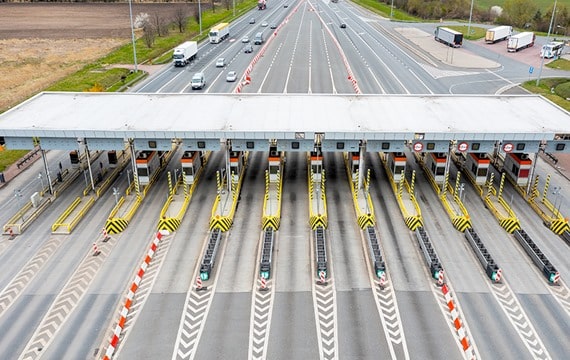
RIT – ETC Toll Management (Electronic Toll Collection)
RIT
Our ETC Toll Management Solution ensures efficient, fast, and reliable toll operations through advanced automation and digital payment technology. From expressways to city roads, we help operators manage tolling systems with maximum accuracy and minimum delays.
Core Features:
- RFID / ANPR-Based TollCollection: Enable seamless, contactless payments with real-time verification.
- Automated Vehicle Classification: Ensure correct toll charges with high-precision sensors and AI-based categorization.
- Centralized Control & Monitoring:
- Fraud & Leakage Prevention: Smart analytics to detect anomalies, prevent revenue loss, and ensure operational transparency.
- Multi-Mode Payment Support: RFID tags, FASTag, wallets, QR codes, and card transactions.
Implemented ETC Toll Services:
ETC Toll Management systems currently deployed across Bangladesh and South Asia use RFID-based vehicle identification, automated barrier control, real-time transaction processing, and centralized monitoring platforms. Vehicles equipped with ETC tags pass through toll lanes without stopping, while toll charges are automatically deducted from prepaid accounts.
- Major highways and expressways
- Strategic bridges and river crossings
- Border and freight corridors
- Urban toll plazas
Benefits of ETC Toll Management:
- Reduced: congestion and wait times at toll plazas
- Improved: revenue collection accuracy and efficiency
- Lower: operational costs through automation
- Enhanced: user convenience with cashless payments
- Real-time: data for traffic management and planning
- Operational Efficiency: Fewer staff are required for manual operations, lowering long-term costs.
- Faster Traffic Movement: Vehicles no longer stop at booths, cutting waiting times drastically.
What is ETC Toll Management?
ETC Toll Management is the administration of electronic toll collection systems, where tolls are charged automatically using RFID, DSRC, or camera-based ANPR technology—without stopping at toll booths
- Tag issuance & activation (RFID tags, e.g., FASTag in India, EZPass in the US)
- Account management (balance, auto-recharge, linked bank/credit accounts)
- Vehicle identification (RFID readers, ANPR cameras)
- Transaction processing (toll calculation, deductions)
- Revenue management (settlement between operators, banks, agencies)
- Reporting & auditing (daily summaries, violations, reconciliations)
ETC Toll Systems:
ETC Toll Management is the administration of electronic toll collection systems, where tolls are charged automatically using RFID, DSRC, or camera-based ANPR technology—without stopping at toll booths.
It involves:
- Tag issuance & activation (RFID tags, e.g., FASTag in India, EZPass in the US)
- Account management (balance, auto-recharge, linked bank/credit accounts)
- Vehicle identification (RFID readers, ANPR cameras)
- Transaction processing (toll calculation, deductions)
- Revenue management (settlement between operators, banks, agencies)
- Reporting & auditing (daily summaries, violations, reconciliations)
How to implement an ETC system:
Implementing an Electronic Toll Collection (ETC) system is a large, multi-disciplinary project involving hardware, software, networking, traffic engineering, payments, and government/regulatory coordination. Below is a complete, practical, engineering-level guide you can use as a blueprint.
How to Implement an ETC System (End-to-End)
Define Objectives & Scope
Decide what type of ETC system you are building:
- Closed system: entry/exit detection determines distance-based toll (e.g., expressways)
- Open system: fixed toll at each booth/plaza
- Free-flow (MLFF): no barriers; gantries read tags automatically
- Hybrid: ETC + cash lanes
Key
questions:
- Number of toll plazas?
- Expected traffic volume?
- Tag technology: RFID, DSRC, or ANPR (camera)?
- Integration with banks or a clearinghouse?